
Selected workCase study
EducationLearning Marketplace
Ramlogics Learn: Learning Marketplace
A learning marketplace where teachers publish structured courses and students learn, take quizzes and earn verifiable certificates, with Stripe payments and Super Admin governance.
The project
A clear idea, shaped into a useful product experience.
A learning marketplace where teachers publish structured courses and students learn, take quizzes and earn verifiable certificates, with Stripe payments and Super Admin governance.
Ramlogics Learn is a learning marketplace built around structured courses and real skills. Teachers create and publish learning material, students discover, purchase and complete courses, and Ramlogics controls approvals, branding, quality governance and website content. Students track progress, complete assessments and receive verifiable certificates when the requirements are met.
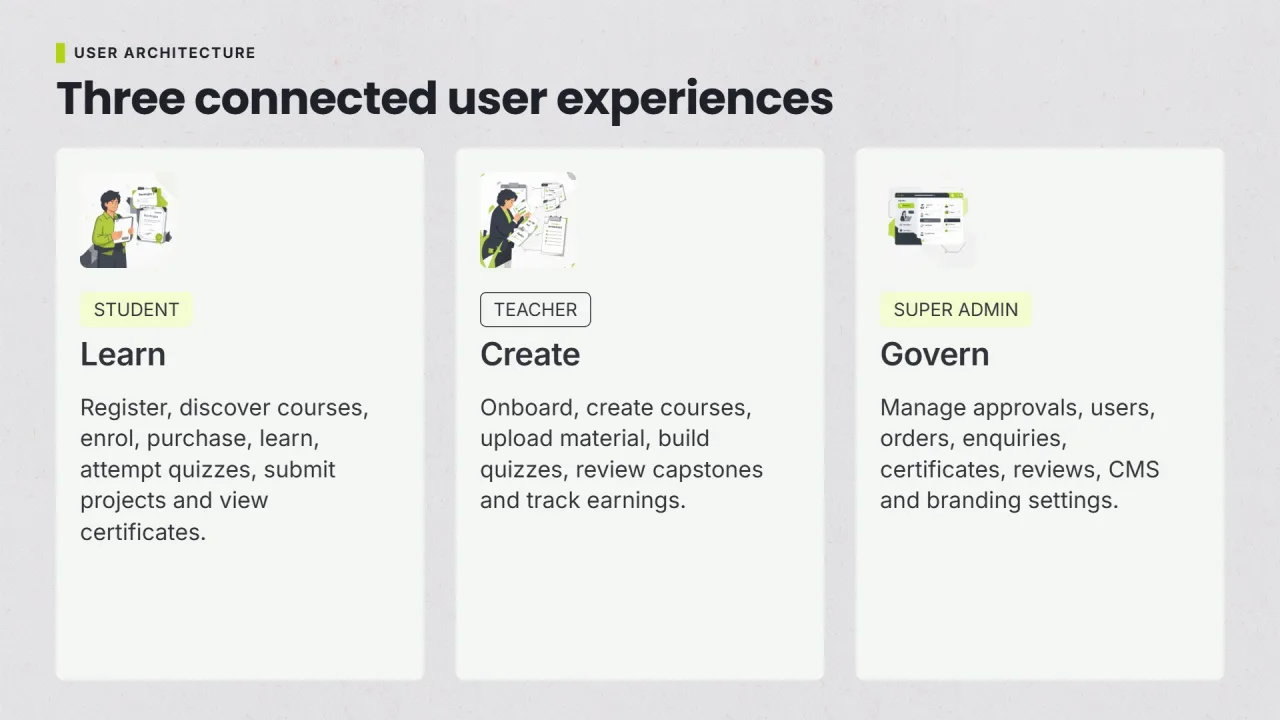
Three connected user experiences
- Student (Learn): register, discover courses, enrol, purchase, learn, attempt quizzes, submit projects and view certificates.
- Teacher (Create): onboard, create courses, upload material, build quizzes, review capstones and track earnings.
- Super Admin (Govern): manage approvals, users, orders, enquiries, certificates, reviews, the CMS and branding settings.
Discover the right course
The student website starts with a homepage that carries Ramlogics branding, hero messaging, course categories, featured courses, instructor profiles, testimonials and FAQs. Learners can search by topic or keyword, filter by category, level and free or paid, and sort by popularity, newest or price. Course cards show pricing, instructor, rating, lesson count and duration, and each course page lists outcomes, prerequisites, curriculum, previews, capstone requirements, reviews and purchase controls.
The learning journey
- Enrol in a course.
- Complete the required lessons.
- Pass each quiz according to its configured pass mark.
- Submit and receive approval for the capstone when required.
- Receive a certificate when the completion requirements are met.
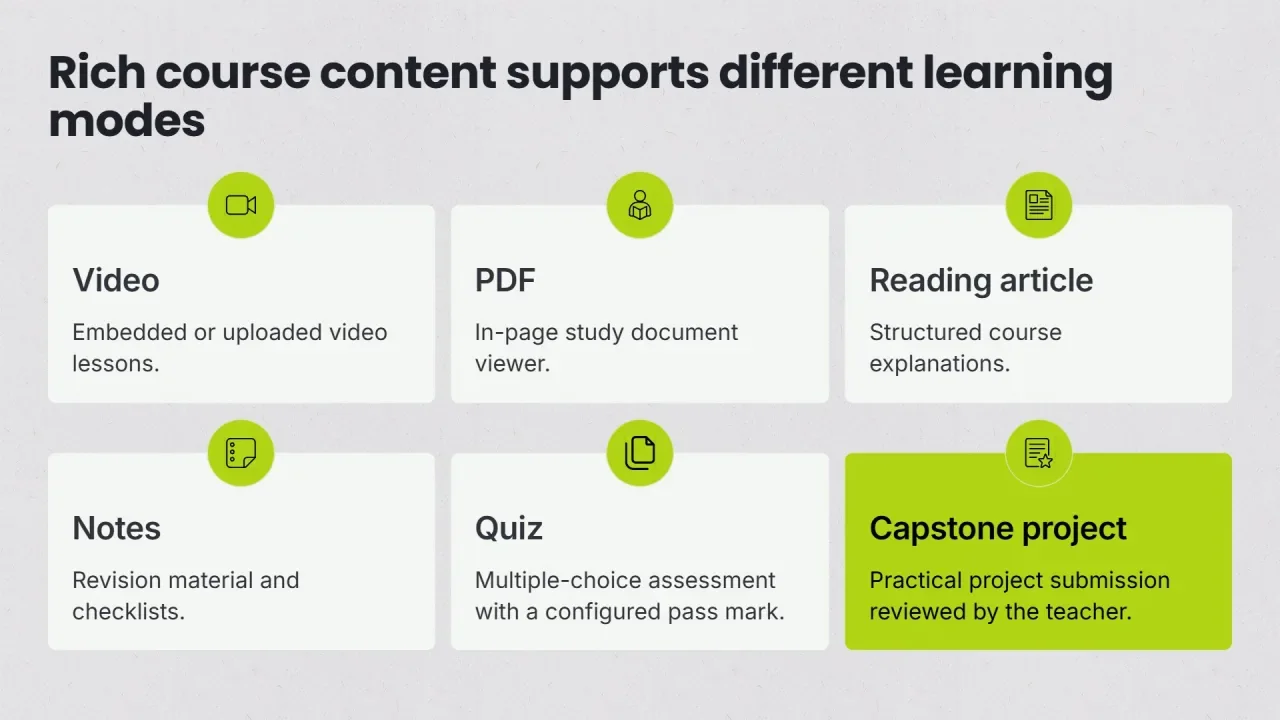
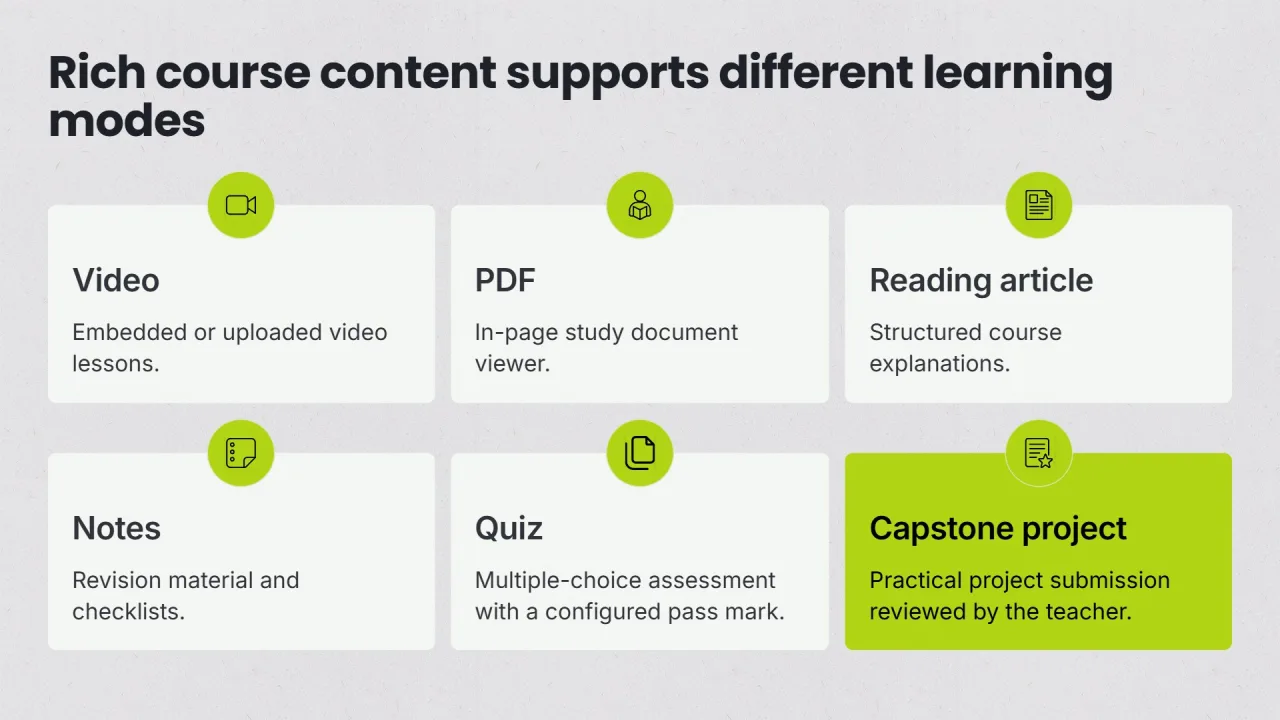
Rich course content for different learning modes
- Video: embedded or uploaded video lessons.
- PDF: an in-page study document viewer.
- Reading article: structured course explanations.
- Notes: revision material and checklists.
- Quiz: multiple-choice assessment with a configured pass mark.
- Capstone project: a practical project submission reviewed by the teacher.
Teacher studio
Teachers onboard for Ramlogics approval by sharing their profile, qualifications, expertise, experience and supporting documents. They then build courses with titles, outcomes, prerequisites, pricing, modules, lessons, uploads, quizzes and capstones, and manage the work by tracking learner progress, giving capstone feedback, viewing earnings, handling support tickets and updating the account. In the current demo, teacher earnings are recorded, but automated bank payouts or Stripe Connect transfers are not included.
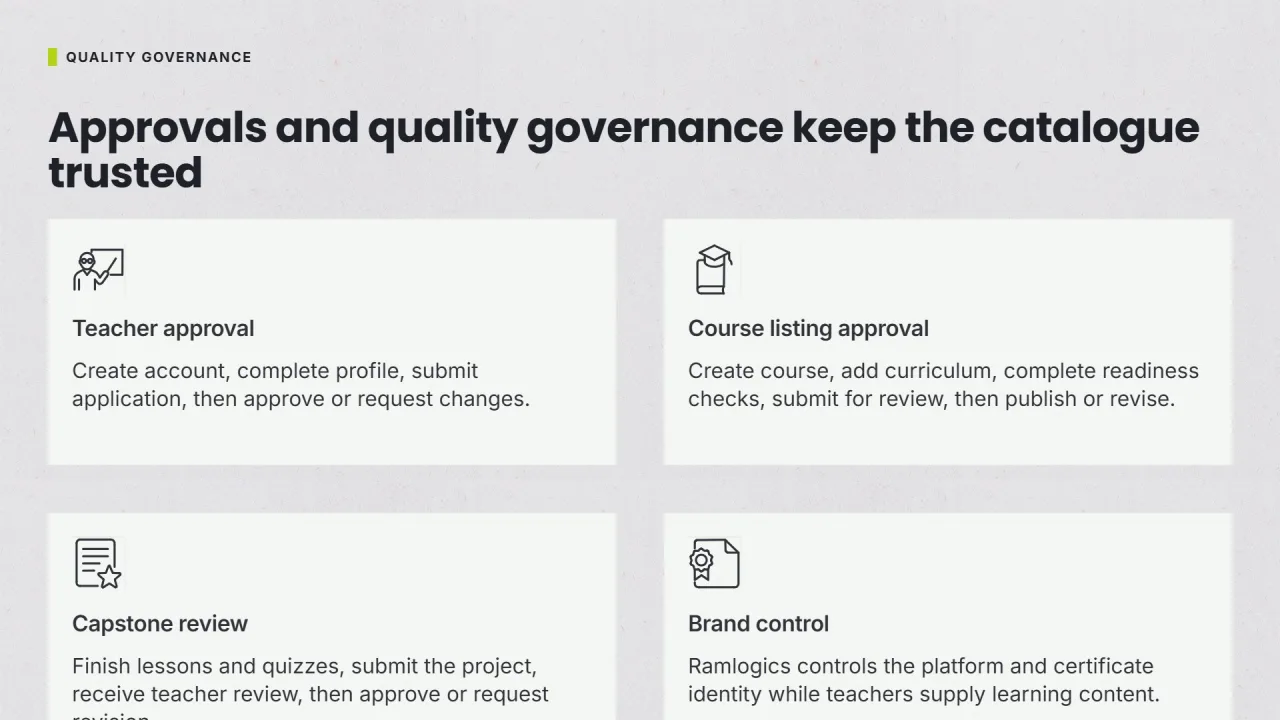
Approvals and quality governance
The catalogue stays trusted through three review steps. Teachers create an account, complete a profile and submit an application, which is approved or sent back for changes. Courses are created, given a curriculum, checked for readiness and submitted for review before they are published or revised. Capstones are submitted after lessons and quizzes, reviewed by the teacher, and approved or sent back. Ramlogics controls the platform and certificate identity while teachers supply the learning content.
One Super Admin portal
- Dashboard: revenue, platform earnings, learners, courses, certificates and pending activity.
- Management: teacher, learner and course management, including approval, moderation and access controls.
- Commerce and trust: orders, invoices, eligible refunds, enquiries, reviews and certificates.
- Platform controls: CMS, branding, payment settings and administrator accounts.
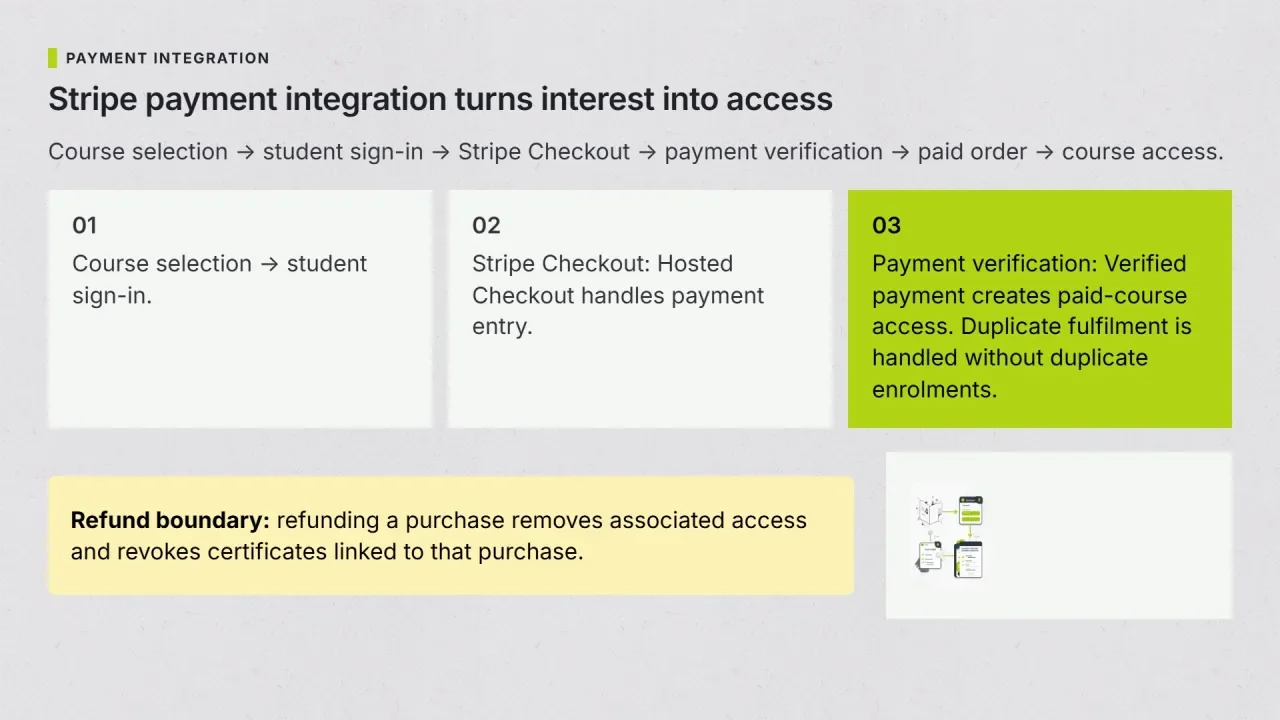
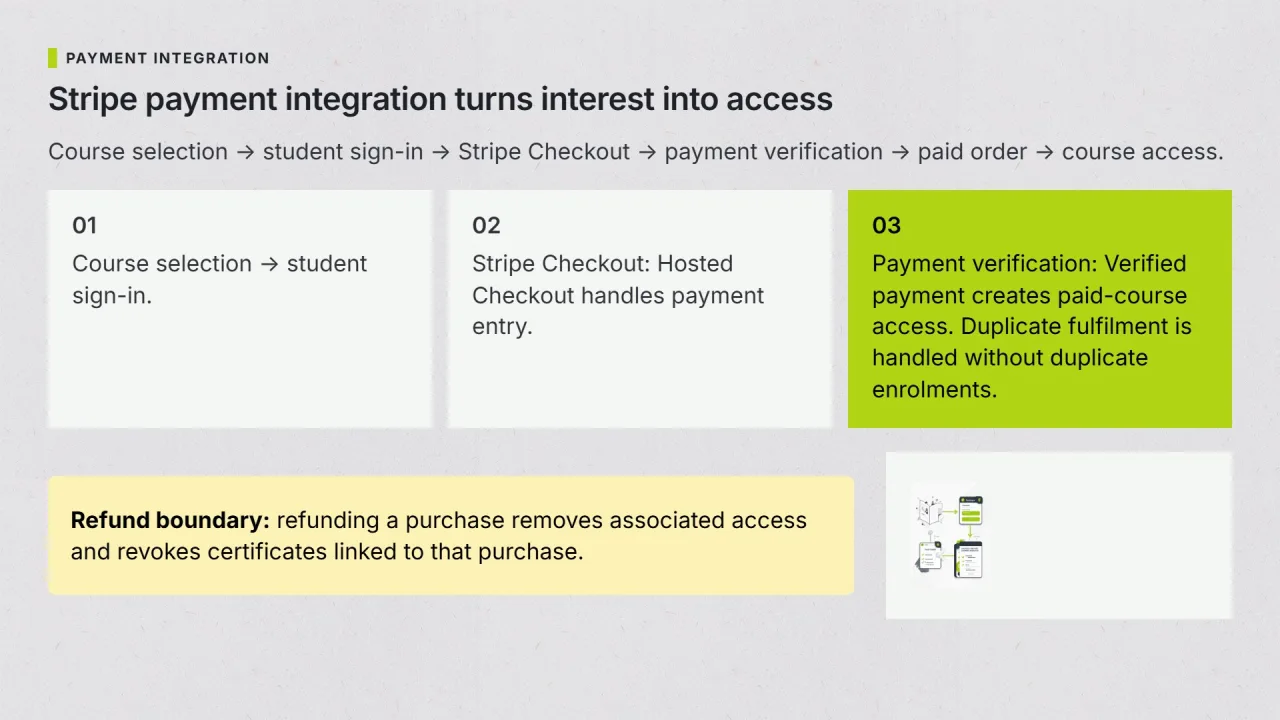
Stripe payment integration
Paid courses follow one path: course selection, student sign-in, Stripe Checkout (hosted checkout handles payment entry), payment verification, a paid order and then course access. Verified payment creates paid-course access, and duplicate fulfilment is handled without creating duplicate enrolments. Refunding a purchase removes the associated access and revokes the certificates linked to that purchase.
Inside the case study
Selected pages from the full PDF. Click an image to enlarge it, or open the complete document with the button above.
Understanding the context
The product starts with a situation worth making simpler.
A learning marketplace where teachers publish structured courses and students learn, take quizzes and earn verifiable certificates, with Stripe payments and Super Admin governance.
Three connected roles
Students learn, teachers create and the Super Admin governs approvals, quality and branding
Course discovery
Search and filter by topic, category, level and free or paid, sorted by popularity, newest or price
Rich course content
Video, PDF, reading articles, notes, quizzes with pass marks and capstone projects
How the work is framed
From a real need to a considered product direction.
This story follows the evidence available in the project brief. It separates the problem, the product decisions, the documented flow, and the final interface so the work is easy to review.
Understand the context
A learning marketplace where teachers publish structured courses and students learn, take quizzes and earn verifiable certificates, with Stripe payments and Super Admin governance.
Define the opportunity
The brief identifies the product need and the constraints that shape the experience.
Shape the solution
The documented feature set provides the product direction.
Review the result
The flow, interface documentation, and live product link make the proposed experience tangible and reviewable.
Product lenses
The people and moments this experience is designed to support.
Three connected roles
Students learn, teachers create and the Super Admin governs approvals, quality and branding
Design focus Make this part of the journey clear, useful, and easy to return to.Course discovery
Search and filter by topic, category, level and free or paid, sorted by popularity, newest or price
Design focus Make this part of the journey clear, useful, and easy to return to.Rich course content
Video, PDF, reading articles, notes, quizzes with pass marks and capstone projects
Design focus Make this part of the journey clear, useful, and easy to return to.Learning journey
Enrol, complete lessons, pass quizzes, get capstone approval and receive a certificate
Design focus Make this part of the journey clear, useful, and easy to return to.Teacher studio
Onboarding for approval, a course builder, learner progress, capstone feedback and earnings tracking
Design focus Make this part of the journey clear, useful, and easy to return to.Stripe payments
Hosted Stripe Checkout with verified payments, duplicate-safe fulfilment and refund handling
Design focus Make this part of the journey clear, useful, and easy to return to.Selected interface story
Three views that explain the product without making visitors browse a document archive.
The brief is edited into a short visual narrative: what the product is, how the main experience is organised, and what the documented scope includes.
In the browser
Explore the product experience.
Load the live product previewThe preview loads only when you open it. Some product sites may restrict embedding.
If the embedded preview is unavailable, open the product in a new tab using the link above.
Product direction
The capabilities that shape the experience.
Three connected roles
Students learn, teachers create and the Super Admin governs approvals, quality and branding
Course discovery
Search and filter by topic, category, level and free or paid, sorted by popularity, newest or price
Rich course content
Video, PDF, reading articles, notes, quizzes with pass marks and capstone projects
Learning journey
Enrol, complete lessons, pass quizzes, get capstone approval and receive a certificate
Teacher studio
Onboarding for approval, a course builder, learner progress, capstone feedback and earnings tracking
Stripe payments
Hosted Stripe Checkout with verified payments, duplicate-safe fulfilment and refund handling
The product language
A system that keeps the experience coherent as it grows.
The case-study record is used as the source of truth for the product direction. The interface, flow, and documentation stay connected to the same scope instead of presenting isolated screens.
Documented technology
- Stripe Checkout
Boundary: Working demo
Conclusion and design notes
What the documented product covers.
Technology
- Stripe Checkout
Documented status: Working demo
Have a product idea?
Let’s make the next one yours.
Tell us what you are building and we’ll help plan a practical next step.